

How Automation Improves Metal Processing Accuracy
Comments Off on How Automation Improves Metal Processing Accuracy
In the metal fabrication industry, margins for error are virtually nonexistent. Clients demand tight tolerances and fast turnaround times, pressuring manufacturers to deliver flawless components every single time. While manual craftsmanship holds value, it often struggles to meet the rigorous consistency required by modern engineering standards. This is where industrial automation steps in to bridge the gap.
By integrating advanced robotics and software into the production line, these companies elevate the quality of their output significantly. If you’d like to know more about how automation has improved metal processing accuracy, you’ve come to the right place.
Precision in Cutting and Shaping
Achieving geometric complexity requires tools that go beyond the capabilities of the human hand. Automated equipment, particularly CNC machines, executes pre-programmed designs with micrometer-level precision. Whether using laser, plasma, or waterjet cutters, these systems follow digital schematics without deviation.
This eliminates the slight variances often introduced by manual operation. Consequently, companies also significantly reduce material waste generated by scrap parts. When teams rely on automated cutting, they ensure that the first part produced in a run is identical to the last, maintaining strict adherence to the original CAD model.
Real-Time Monitoring and Adjustments
Modern metal processing thrives on data. Intelligent fabrication systems now incorporate sophisticated sensors and AI-driven monitoring tools that track variables such as temperature, pressure, and tool speed in real-time.
These closed-loop feedback systems do not just record data; they act on it. If a sensor detects a drill bit heating up or a slight vibration in a lathe, the system instantly adjusts operational parameters to compensate. This dynamic response prevents thermal distortion and ensures that tooling wear doesn’t compromise the dimensional integrity of the final product.
Consistency in Repetitive Tasks
Variability is the enemy of mass production. Even the most skilled operators experience fatigue, which inevitably leads to minor inconsistencies over long shifts. Automation excels in this arena by performing repetitive tasks with unwavering uniformity.
Robotic arms and automated press brakes apply the exact same force and angle for every operation. This standardization ensures batch uniformity, which is critical for assembly lines where parts must fit together perfectly without manual modification. By removing the human variable from repetitive actions, companies can stabilize their throughput and guarantee a predictable, high-quality output.
Advanced Quality Control
Accuracy extends beyond fabrication; it encompasses verification. Automated inspection systems represent the final firewall against defective products reaching customers. High-resolution cameras and laser scanners examine surface finishes and dimensional accuracy at speeds impossible for human inspectors.
These automated optical inspection (AOI) units identify microscopic defects, such as hairline cracks or porosity, that the naked eye might miss. By catching these imperfections early, teams can prevent costly recalls, which will help their company maintain a reputation for superior quality.
Where Thin Metal Sales Comes Into Play
If you’re looking for a company that utilizes these concepts to achieve a quality product, then you’ve come to the right place. Our business provides top-of-the-line copper sheet metal fabrication products by leveraging automation to the fullest. See how automation has improved our metal processing accuracy.
Testing Methods for Thin Sheet Metal Integrity
Comments Off on Testing Methods for Thin Sheet Metal Integrity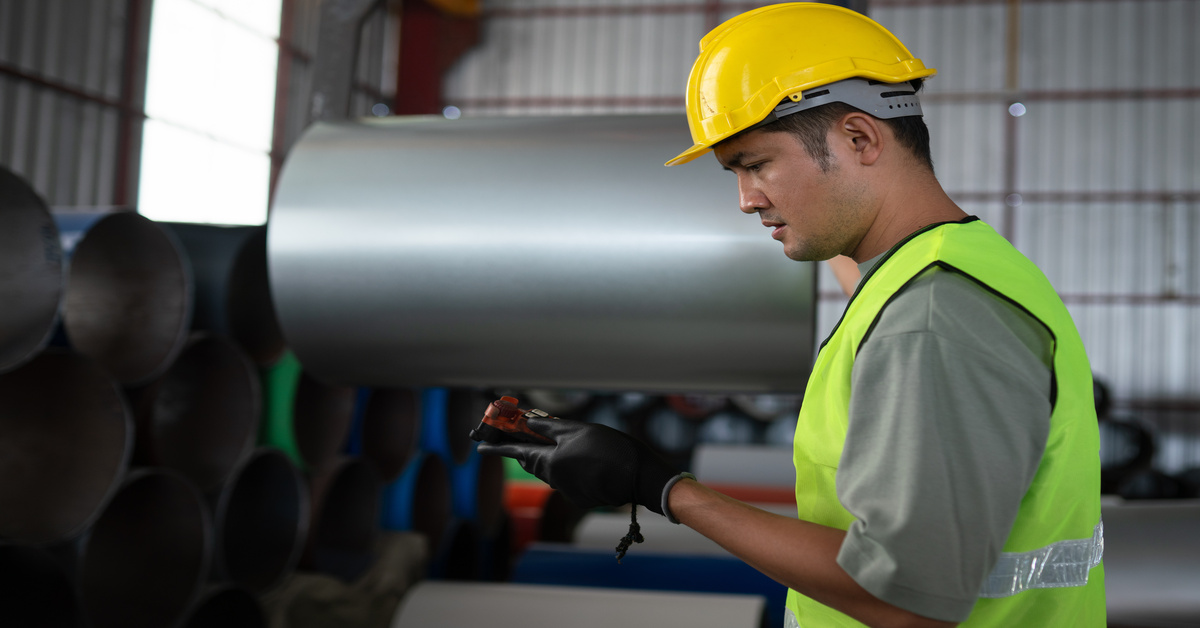
Working with light-gauge metals presents a unique set of challenges compared to structural plate. Most particularly, precision is paramount when handling thin sheet metal, as even the slightest deviation in material specifications can compromise downstream manufacturing processes and final part performance.
Verifying the mechanical properties of your coil or sheet stock prevents costly scrap and downtime. Therefore, selecting the right verification protocols remains a non-negotiable step in your QA process. To make sure you choose the right one, here’s a quick overview of the main testing methods for assessing thin sheet metal integrity.
Tensile Testing
You likely rely on tensile testing as your primary method for determining formability. By pulling a standard coupon until failure, you generate a stress-strain curve that reveals critical data points like Yield Strength, Ultimate Tensile Strength (UTS), and elongation.
For thin gauges, this data predicts how the material behaves under the immense stress of deep drawing or stretching. If the elongation percentage is too low, you risk splitting the part during fabrication. Consequently, this test confirms the metal possesses the necessary ductility to meet your geometric tolerances.
Hardness Testing
While tensile strength tells part of the story, you also need to know how the material resists localized deformation. Hardness testing measures the metal’s resistance to indentation. However, standard Rockwell C or B scales might pierce thin sheets entirely, skewing your results. Instead, you should utilize:
- Rockwell Superficial Hardness Testing: Uses lighter loads suitable for thin materials.
- Vickers Hardness Test: Uses a diamond pyramid indenter, ideal for micro-hardness testing on foil or very thin gauges.
These methods guarantee that you measure the material’s actual hardness rather than the properties of the anvil underneath.
Non-Destructive Testing (NDT)
Sometimes, destroying the sample isn’t an option, especially when inspecting finished components or after finding some quality aluminum sheets for sale. NDT techniques allow you to examine the internal and surface integrity of your metal without compromising it.
Ultrasonic testing sends high-frequency sound waves through the sheet to detect laminar tearing or internal inclusions that rolling might have caused. Additionally, Eddy Current testing induces electrical currents in the conductive material. Any disruption in the flow points to surface cracks or voids. These methods provide peace of mind regarding the material’s internal continuity.
Fatigue Testing
Static strength is one thing; survival under dynamic stress is another. If your application involves vibration or oscillating loads, you must verify endurance limits through fatigue testing.
You can do this by applying cyclic loading to the specimen to simulate the operational lifespan of the part. This process identifies the maximum stress the metal can withstand for a specified number of cycles without failure. It helps you avoid catastrophic fractures in components like brackets or springs that flex during use.
Corrosion Testing
Finally, it’s important to remember that environmental resilience matters for any exposed application. Corrosion testing is a method used on thin sheet metal that accelerates real-world weathering to predict lifespan and determine its integrity.
The standard Salt Spray Test (ASTM B117) does this by exposing the sheet—and any applied coatings—to a saline fog chamber. During this time, you’ll monitor the sample to see how many hours pass before red rust appears. This validates that your galvanization or alloy selection will hold up against moisture and oxidation in the field.