
Nervous Flyer? Here Are The Reasons You Shouldn’t Be!
Approximately one billion U.S. men and women fly privately or commercially in any given year, according to the Federal Aviation Administration (FAA).

That means–every year–one billion Americans trust airlines and aircraft workers to safely get them from point A to point B. Airline travel is extraordinarily safe. In fact, it is the safest mode of travel, and the facts back that up. Let’s take a look at a few:
-
- Turbulence is Nothing to Fear!
Although turbulence may make passengers nervous, it’s a perfectly normal occurrence and does not indicate that anything is awry. Planes have systems in place to keep them level. They will not flip over or go into a tailspin during turbulence. “Think of turbulence the same way you would think of bumps in the road on a long drive,” Life Hacker writes. “The main reason pilots do their best to avoid turbulence is because it’s annoying. They want to be able to sip their coffee without spilling the same as you do.”
Moreover, of the one billion passengers mentioned earlier, just 34 people on average are injured due to turbulence each year.
-
- Air Travel is Much Safer Than Driving.
To briefly break out the numbers, driving is the most dangerous form of transportation–by far! Drivers have a 1 in 114 chance of being in a fatal accident. Comparatively, only one in two million flights involve fatalities, or individual risk of dying in a plane crash amounts to about 1 in approximately 10,000, according to the National Safety Council (NSC).
We drive every day and feel safe doing it. Air travel is much, much safer, so it makes sense to feel just as safe–or safer!–when flying!
-
- Planes Are Tested–And Tested Again!–Prior to Sale.
Aerospace manufacturers choose from thin metal strips, brass and copper, stainless steel, combined metals, and copper sheet metal for sale, and begin putting together the frame of the plane. (Aluminum in all its forms–in bar shapes or cold-rolled–and stainless steel are most frequently purchased.) At completion, planes undergo several tests to ensure that they are safe and air-ready.
For example, the wings and the materials companies use to build the wings such as aluminum and copper sheet metal, are bent and put under stress. This simulates extreme situations. Manufacturers design wings to withstand stress, bouncing, and bending.
-
- Aircrafts Go Through Regular, Ongoing Inspections.
Cars require a single annual inspection, and that’s it. Some states, like Florida, don’t even require that much. Aircraft, on the other hand, require annual inspections plus 100-hour or progressive inspections. Both 100-hour and progressive inspections are frequent and ongoing inspections. Safety features and structures undergo tests before every flight.
Planes are extremely safe. Manufacturers don’t just simply purchase metals, such as copper sheet metal for sale, throw it together, and call it a day. The same copper sheet metal for sale, once crafted into a plane, undergoes regular inspections. Tests are required prior to sale, planes are built to withstand turbulence, and statistics show that these measures add up to flying being one of the safest possible means of travel.
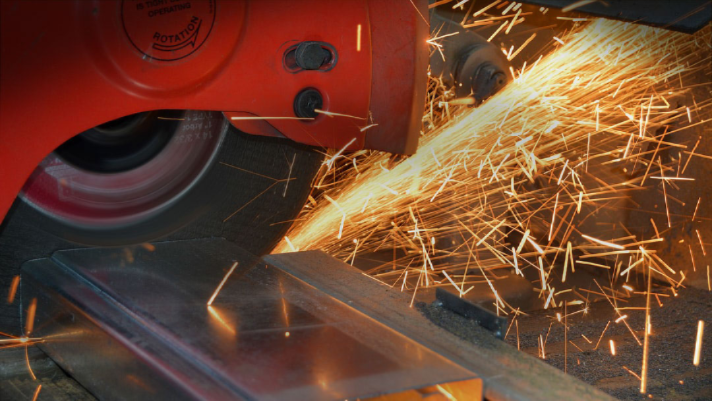 The thin metal strips industry has significantly grown in the last five years. It is attracting huge attention from building and contractors who are looking for alternative construction materials. Brass and copper have specifically experienced significant growth in the last few years owing to their lightweight property. The same can be said for thin aluminum strips.
 When it comes to elements, aluminum is available in large quantities on the crust of the earth. As a metal, it is a useful material for many industries. There exist various kinds of metallic aluminum, which are called aluminum alloys, which differ in characteristics.
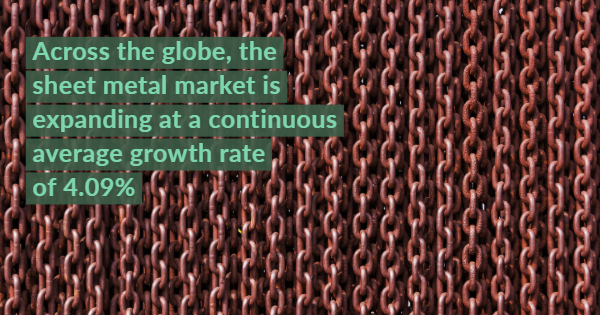 Whether you work in aerospace parts, chemical etching, or stamping, the quality of your combined metals has an enormous impact on the overall quality of your work and your output. In turn, the reputation of your facility also hinges on the durability of your parts. When you find yourself asking questions such as “
 From transport to the medical industry, metals are useful and reliable. Statistics from the United States Bureau of Labor Statistics indicate that the metal fabrication sector will grow by 9% between 2016 and 2026. This is a clear indication that copper, brass and other combined metals are in huge demand.
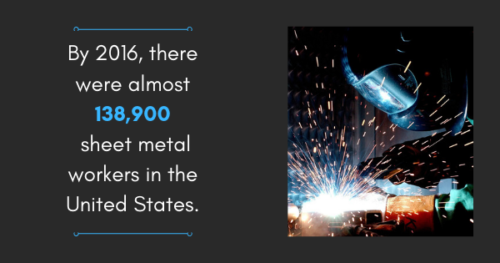 Metal fabrication pays a big role in the economy. Consider that there were almost 138,900 sheet metal workers in the U.S. in 2016 alone. The metal fabrication industry not only provides jobs to thousands of people but also plays a big role in day to day activities. How? Let’s take a quick look. But first, we need to review some basics about metal fabrication.
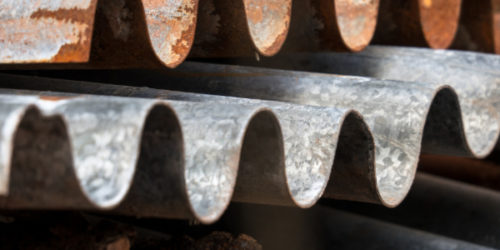 Most of us are familiar with sheet metal. This is metal that has been cut into thin metal strips. It is quite a versatile material because it is a great insulator and very pliable. Here are five industries that make good use of